01
Lane guidance
Reads lane markings for lane-departure warnings and lane-keeping assistance.
 970.795.2323
In-shop ADAS calibration in Loveland
Many newer vehicles use a camera mounted behind the windshield. After the glass is replaced, the manufacturer may require that camera to be aimed and verified again.
Windshield replacement and calibration—all in one shop.
Plain-English explanation
ADAS stands for Advanced Driver Assistance Systems. Depending on the vehicle, a windshield-mounted camera can support several familiar safety features.
Reads lane markings for lane-departure warnings and lane-keeping assistance.
May support forward-collision warnings and automatic emergency braking.
Helps equipped vehicles judge traffic ahead for adaptive cruise control.
Why the windshield matters
The replacement windshield, its camera bracket and the installed position all become part of the camera’s view. A small change close to the vehicle becomes a larger difference farther down the road.
What the camera must see
Simple visual
This is a conceptual illustration. The vehicle’s required procedure and pass criteria come from the manufacturer.
A small change near the camera grows farther down the road.
The aiming procedure confirms the camera’s reference.
When it may be required
Calibration requirements vary by year, make, model and installed equipment. We verify the procedure instead of assuming.
The camera now looks through different glass and a newly installed camera bracket.
Removing the camera from its bracket can trigger a manufacturer-required aiming procedure.
Repairs that change ride height, alignment or sensor position may require calibration.
The correct requirement comes from the vehicle-specific service information—not a guess or dash light.
Three possible procedures
Your vehicle determines the method. We do not substitute one procedure for another.
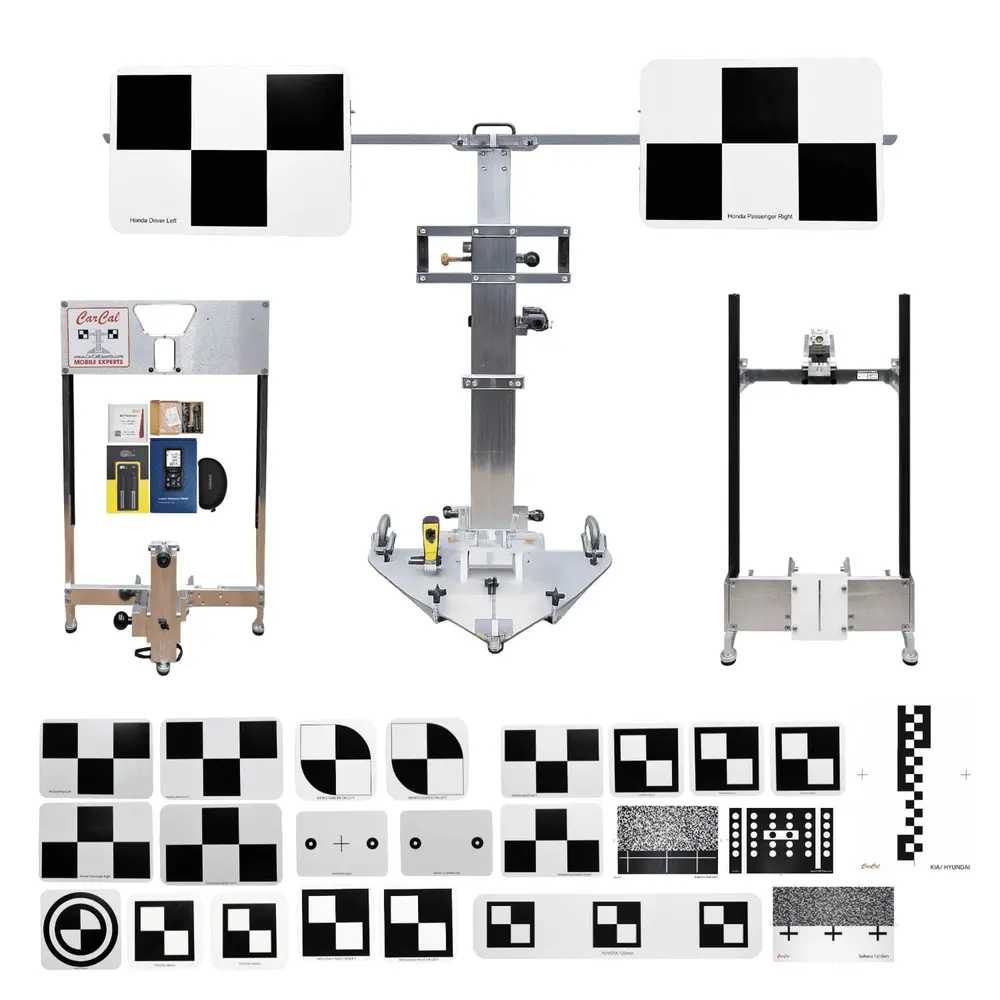
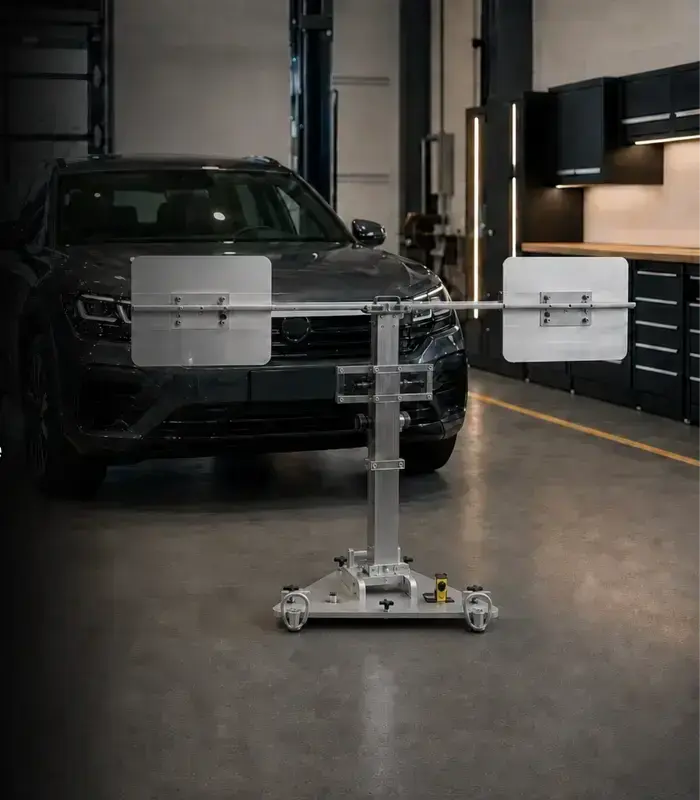
The vehicle remains stationary while precisely positioned targets are presented to the camera. Lighting, floor conditions, measurements and target placement matter.
A scan tool guides a road calibration under required speed, roadway, lane-marking and environmental conditions.
Some vehicles require both steps. The calibration is not complete until every required procedure is successfully finished.
Our in-shop process
Static calibration requires controlled measurements and space, which is why Empire performs calibrations at our Loveland shop.
We confirm the equipment on your vehicle and check the manufacturer’s calibration procedure.
We scan the vehicle, confirm prerequisites and prepare the controlled calibration area.
Targets are measured and positioned for static calibration, a prescribed road procedure is completed, or both.
We confirm completion, check system status and provide the calibration record.
Common questions
If you are unsure what your vehicle has, call us with the year, make and model.
No. The requirement depends on the vehicle, installed equipment and manufacturer procedure. We check the requirement for your specific vehicle.
A dash light is not the rule used to decide whether calibration is required. The vehicle manufacturer’s procedure is the controlling information after replacement or camera disturbance.
Do not assume it will. A required static or dynamic calibration must be deliberately started and completed with the appropriate diagnostic and calibration equipment.
Timing varies by vehicle and procedure. Static, dynamic and dual calibrations have different setup and completion requirements. We will explain the expected timing when scheduling.
Many comprehensive glass claims include manufacturer-required calibration, but coverage varies. We can help coordinate the claim and explain any customer responsibility before the work.
At our Loveland shop. The controlled environment gives us the space, lighting and measurement conditions needed for vehicle-specific procedures.
Ready when you are
Tell us your vehicle year, make and model. We will check the ADAS equipment and required procedure.